admin
admin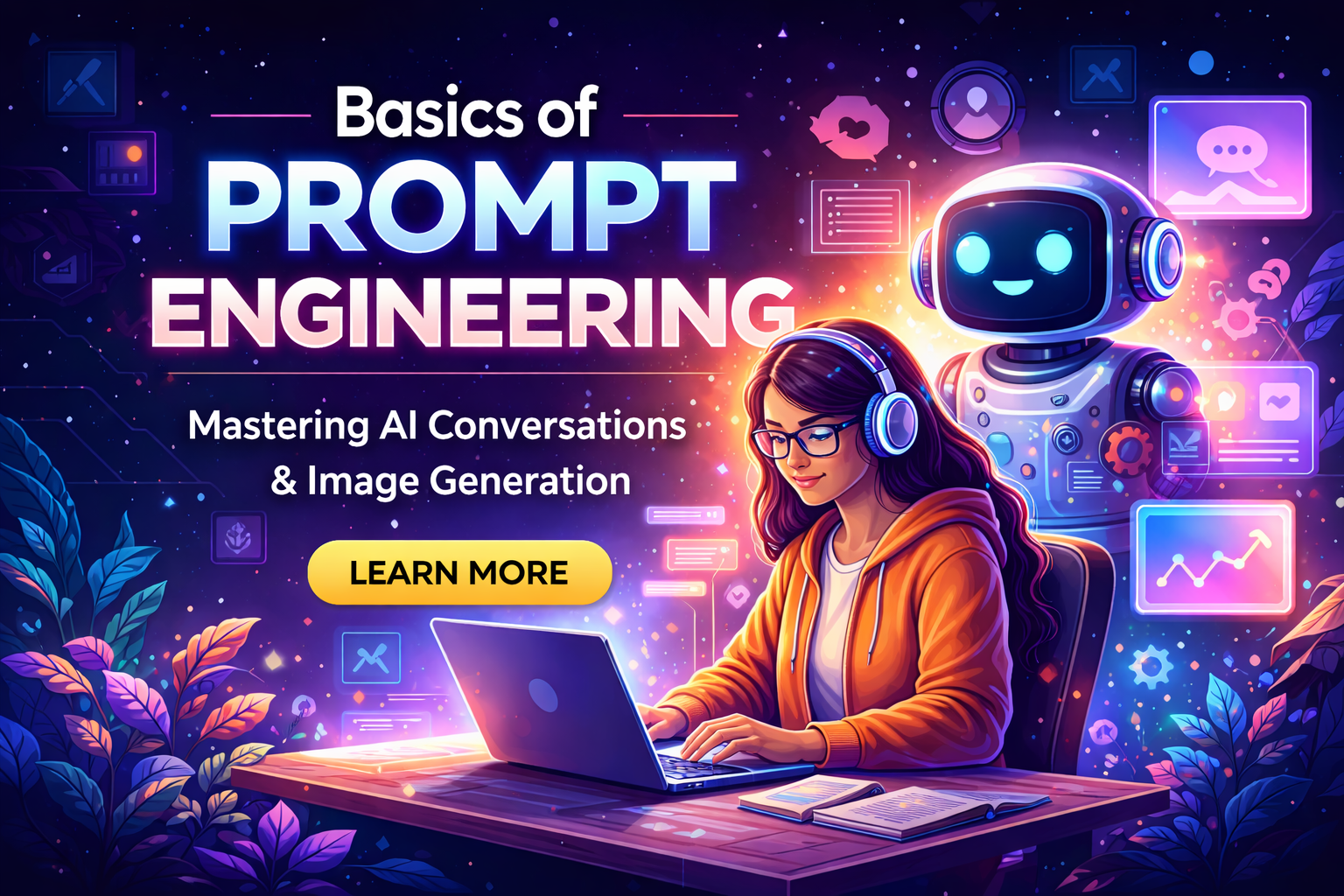
Not long ago, Artificial Intelligence felt like something far away. Something for programmers, researchers, or big tech companies. Now? It’s just part of daily life.
We ask ChatGPT questions like we’re talking to a person. We use AI to write emails when we’re tired, generate images when we don’t have design skills, and come up with content ideas when our brain feels empty. Some people even use it to help with coding or planning their workday.
AI has slipped into our routines without making a big noise about it.
But here’s the thing most people learn the hard way.
AI doesn’t magically understand what you want. It only understands what you tell it.
That’s why prompt engineering matters – and why it’s becoming such an important skill right now.
Why People Get “Bad Results” From AI
You’ve probably seen this happen. Maybe you’ve experienced it yourself.
You type something into an AI tool and think, “Why is this so generic?”
Or, “That’s not what I meant at all.”
So people blame the tool.
But in most cases, the issue isn’t the AI.
It’s the way the request was written.
Prompt engineering is really just learning how to communicate better with AI. When you know how to:
✍️Explain what you want clearly
✍️Give a bit of context
✍️Set the tone and structure
the results change completely.
Instead of random or boring outputs, AI starts giving answers that actually feel useful – sometimes even impressive.
Prompt Engineering, Explained Without the Jargon
At its core, prompt engineering is simple.
It’s the habit of writing better instructions.
Think of AI like a very fast assistant who takes everything literally. If you’re vague, the output will be vague. If you’re clear, the output improves.
For example, typing:❌ Basic prompt:
“Write about marketing”
will usually give you something flat and forgettable.
But if you say:✅ Engineered prompt:
“Write a friendly, easy-to-read article about digital marketing trends in 2025, with real examples and short sections”
you’ll get something much closer to what you imagined.
That difference is prompt engineering.
A Beginner-Friendly Way to Learn Prompt Engineering
If you’re new to all this, the Basics of Prompt Engineering course on Alison is actually a good place to start.
What’s nice about this course is that it doesn’t assume you’re technical. You’re not thrown into complex terms or coding. Everything is explained in a way that makes sense, even if this is your first time learning about AI properly.
The course focuses on:
👉How prompts really work
👉Why small wording changes matter
👉How to improve results step by step
👉How professionals approach AI prompting
It feels practical, not academic.
How the Course Is Structured (And Why That Helps)
The course is split into three main parts, and the flow makes sense.
First, You Learn How Prompts Actually Work
Before jumping into techniques, the course helps you understand what’s happening in the background.
You learn:
📚 What a prompt really is
📚 How AI reads and reacts to instructions
📚 Why structure and clarity make such a big difference
Once this clicks, you stop guessing and start being intentional with what you type.
Then, You Learn Real Prompting Techniques
Next, the course introduces common prompting styles professionals use.
You’ll see things like:
Asking AI questions without examples
Guiding it using small examples
Tweaking prompts to improve accuracy
You also learn how to use these techniques with ChatGPT for everyday tasks like writing, summarizing, brainstorming, and rewriting. These are skills you can use immediately, even outside work.
Finally, You Explore AI Image Generation
This part is especially interesting if you work with visuals.
The course shows how to write image prompts for tools like DALL·E, Stable Diffusion, and Midjourney.
You learn how to:
Describe images clearly
Improve quality and style
Adjust details instead of starting over
Turn rough ideas into usable visuals
This is useful for designers, marketers, and content creators who want better results without endless trial and error.
The Course Also Teaches Good AI Habits
Another part I like is that the course doesn’t just teach what to type, but how to think when working with AI.
It covers ideas like:
🧩Avoiding vague prompts
🎯Improving results through small edits
🔄Reusing prompt templates
📜Being responsible and ethical with AI
These habits save time and reduce frustration, especially if you use AI often.
👥 Who Should Take This Course?
🎓 Students & beginners
✍️ Bloggers & content creators
📢 Digital marketers & SEO experts
🤖 Anyone curious about AI
🎨 Designers & social media managers
💼 Entrepreneurs & business owners
Why Prompt Engineering Is Worth Learning Now
Prompt engineering isn’t a trend that’s going away.
As AI tools become more common, the real advantage comes from knowing how to use them well. Companies don’t just want people who use AI. They want people who can guide it, refine it, and get reliable results.
Learning prompt engineering helps you:
🔥Work faster
🔥Get better outputs
🔥Reduce trial and error
🔥Stand out in an AI-driven workplace
It doesn’t replace your skills. It strengthens them.
🔗 Start the FREE course now:
👉 https://alison.com/course/basics-of-prompt-engineering