admin
admin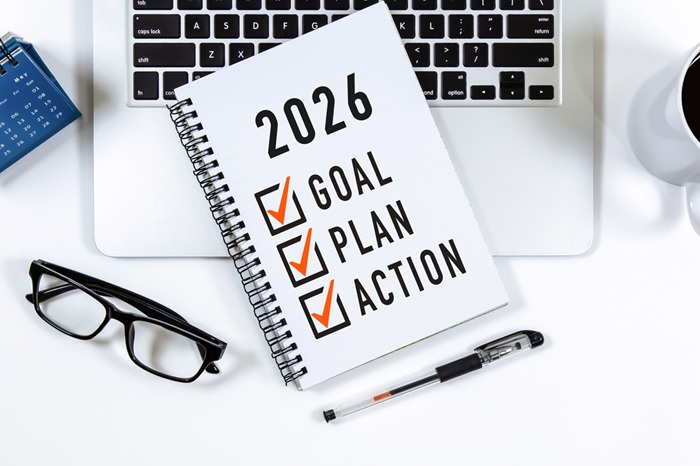
Are You Tired of Wasting Time?
Are you have a bad feeling when you look back at your 2025?
Maybe you feel like you waste too much time… days went so fast… and end of the year you think, “What I really did this year?”
You had good dreams.
You had goals.
But somehow time went just like that… scrolling phone… small small works… busy life… and nothing big happened.
Don’t worry.
So many people feel the same. You are not alone.
But the good thing is…
2026 can be different for you.
And you don’t need expensive apps, digital planners, or complicated systems.
All you need is one simple notebook and a pen.
Yes, hand-writing. Old method. But trust me – this one works like magic.
Let’s start your planning for 2026.
🖊️ Step 1: Get a Simple Notebook (Hand-Written is a MUST)
Before we dive into planning techniques, let’s talk about why hand-writing is non-negotiable for this process.
The Magic of Hand-Writing
When you write something by hand, something remarkable happens in your brain. Unlike typing on a keyboard or tapping on a phone, hand-writing creates a direct connection between your thoughts and your physical actions.
Here’s what happens when you hand-write your goals and plans:
Your brain pays attention. When you write by hand, you’re forced to slow down. You can’t rush through it the way you rush through typing. This deliberate pace allows your brain to fully process what you’re writing. The idea doesn’t just pass through your mind—it settles in.
Memory gets stronger. Research shows that hand-writing activates multiple areas of your brain simultaneously. You’re not just recording information; you’re encoding it deeply into your memory. When you hand-write your goals, you’re far more likely to remember them without constantly checking your list.
Commitment becomes real. There’s something powerful about putting pen to paper. It feels more permanent, more serious, more real than typing on a screen. When you hand-write “I will launch my business in 2026,” your brain registers this as a commitment, not just a passing thought.
The emotional connection deepens. Your handwriting is uniquely yours. When you write your dreams and goals in your own hand, you’re creating a personal artifact of your intentions. Looking back at your handwritten plans creates an emotional connection that digital text simply can’t replicate.
You feel accomplishment. Here’s where the magic really happens. When you complete a task and draw that satisfying tick mark (✓) or check mark next to it, your brain releases dopamine—the reward chemical. That physical act of marking something complete creates a sense of pride and motivation that pushes you to tackle the next item.
✔ What type of notebook?
🌟Any simple notebook
🌟A5 or normal size
🌟Strong cover (you will use entire year)
🌟Use one you actually like
Pro tip: Don’t overthink this. The perfect notebook is the one you’ll actually use. Grab one today and get started.
📅 Step 2: Plan Your Year—The Big Picture
Now that you have your notebook, let’s start planning 2026. We’ll work from big picture to daily details.
Set Your Annual Goals
Open to the first page of your notebook. At the top, write:👉 “My 2026 Goals”
Now, think carefully and write down 3-5 major goals you want to achieve this year. Not 20 goals. Not a random wish list. Just 3-5 significant achievements that would make 2026 a transformative year for you.
Examples:
⭐Launch my online business and earn my first $10,000
⭐Lose 20 pounds and run a 5K
⭐Read 24 books (2 per month)
⭐Save $5,000 for an emergency fund
⭐Learn a new skill (coding, design, language, etc.)
Important: Write these goals in present tense or as if you’ve already achieved them. Instead of “I want to lose weight,” write “I am fit and healthy, weighing [your target weight].” This psychological trick makes your brain believe it’s possible.
❌ I want to lose weight ✅ I am healthy and fit now
➗ Break Goals Into Quarters
For each major goal, break it down into quarterly milestones. This makes big goals feel manageable and keeps you on track.
Example: If your goal is “Launch my online business”
Q1 (Jan-Mar): Research my niche, validate my business idea, create a business plan
Q2 (Apr-Jun): Build my website, create my first products/services, set up social media
Q3 (Jul-Sep): Launch officially, get first 10 customers, refine based on feedback
Q4 (Oct-Dec): Scale marketing, reach $10,000 revenue target, plan for next year
Write these breakdowns on separate pages for each goal. Now your huge goal doesn’t feel overwhelming, it’s just four manageable chunks.
📊 Step 3: Monthly Planning — Your Action Map
At the beginning of each month, dedicate a page to that month’s plan.
Monthly Planning Template
Write at the top: “January 2026” (or whichever month)
Section 1: Monthly Focus What’s your main priority this month? Pick ONE thing from your quarterly goals that gets primary attention this month.
Example: “Complete business plan and finalize my niche”
Section 2: Key Tasks List 5-10 specific tasks you need to complete this month to move toward your monthly focus.
Example:
⭐Research 10 competitors in my niche
⭐Interview 5 potential customers
⭐Write complete business plan
⭐Set up business bank account
⭐Create brand name and logo concepts
Section 3: Important Dates Any deadlines, appointments, or events this month that you need to remember.
Section 4: Habits to Build Choose 1-3 habits you’ll practice daily this month.
Example:
⭐Wake up at 6 AM daily
⭐Exercise for 30 minutes
⭐Work on business for 1 hour before day job
📝 Step 4: Weekly Planning — Where Progress Happens
This is where productivity really takes off. Every Sunday evening (or Monday morning), spend 15 minutes planning your week.
Weekly Planning Process
Create a weekly spread in your notebook:
At the top of a new page, write: “Week of [Date]“
Section 1: Week’s Top 3 Priorities
From your monthly plan, what are the three most important things to accomplish this week? Write these clearly and boldly.
Section 2: Daily Breakdown
Create a section for each day of the week:
Monday:
📌Task 1
📌Task 2
📌Task 3
Tuesday:
📌Task 1
📌Task 2
📌Task 3
(Continue for each day)
Important principle: Don’t overload your days. List 3-5 realistic tasks per day. You can always add more if you finish early, but starting with an overwhelming list kills motivation.
Section 3: Time Blocks
Identify specific time blocks for your most important work.
Example:
🔥6:00-7:00 AM: Morning routine and exercise
🔥7:30-8:30 AM: Work on business project
🔥12:00-12:30 PM: Lunch + quick walk
🔥6:00-7:00 PM: Learning time (reading/course)
The Power of the Check Mark ✓
Here’s where hand-writing becomes incredibly motivating. As you complete each task throughout the week, physically draw a check mark (✓) next to it.
That simple action-putting pen to paper and marking something complete-triggers a dopamine release in your brain. You feel accomplished. Proud. Motivated to tackle the next task.
This is why people love crossing items off physical lists. Digital checkboxes don’t create the same emotional response.
Pro tip: Use different marks for different outcomes:
✅ = Completed
👉 = Moved to tomorrow
❌ = Cancelled/not relevant anymore
⭐ = Completed exceptionally well
🎯 Step 5: Daily Planning — Your Daily Wins System
Each evening (or morning), spend just 5 minutes planning the next day.
Daily Planning Method
At the top of a page, write: “Tuesday, January 14, 2026”
Section 1: Top 3 Must-Do Tasks
What are the three most important tasks that MUST get done today? These are your non-negotiables.
Example:
✅Complete project proposal for client
✅30-minute workout
✅Call potential business partner
Section 2: Additional Tasks (If Time Allows)
List 3-5 smaller tasks you’d like to complete if you have extra time.
Section 3: Time Blocks
Assign specific times to your top 3 tasks.
Example:
✅9:00-11:00 AM: Work on client proposal (deep focus, no interruptions)
✅12:00-12:30 PM: Workout
✅3:00-3:30 PM: Call business partner
Section 4: Evening Reflection
At the end of each day, spend 2 minutes reflecting:
❓What did I accomplish? (Add those satisfying check marks!)
❓What challenged me today?
❓What’s one thing I’m grateful for?
❓What’s my #1 priority for tomorrow?
This reflection practice keeps you honest, helps you learn from each day, and maintains momentum.
💡 Advanced Productivity Techniques to Add to Your Notebook
Once you’ve mastered the basic planning structure, try these powerful techniques:
The 2-Minute Rule
If a task takes less than 2 minutes, do it immediately rather than writing it down. This prevents small tasks from cluttering your list and your mind.
Time Blocking in Color
Use different colored pens to categorize different types of tasks:
Blue: Work/business tasks
Green: Health/exercise
Red: Urgent/important
Purple: Learning/personal development
Visual organization helps your brain quickly process your plan.
The “MIT” Method (Most Important Task)
Each day, mark your single most important task with a star or highlight it. Complete this FIRST, before anything else. Even if nothing else gets done that day, accomplishing your MIT means the day was successful.
Habit Tracking
Create a simple grid at the back of your notebook to track daily habits.
Example:
| Habit | Mon | Tue | Wed | Thu | Fri | Sat | Sun |
|---|---|---|---|---|---|---|---|
| 6AM Wake Up | ✓ | ✓ | ✓ | ✓ | ✓ | ||
| Exercise | ✓ | ✓ | ✓ | ✓ | ✓ | ||
| Read 20 min | ✓ | ✓ | ✓ | ✓ | ✓ | ✓ |
Seeing those check marks accumulate creates powerful motivation to maintain your streak.
Brain Dump Pages
Keep a few blank pages designated for “brain dumps.” When random ideas, worries, or thoughts pop up during the day, quickly jot them down here. This clears your mental space and prevents good ideas from disappearing.
Weekly Wins
Every Sunday, create a “Weekly Wins” page where you list everything you accomplished that week. This builds confidence and momentum. When you’re feeling discouraged, flip back through your wins and remember how far you’ve come.
🚀 Making It Stick: Your 2026 Success System
Planning is just the first step. Here’s how to make sure you actually follow through:
1. Make It a Morning Ritual
Start each day by opening your notebook and reviewing your plan. This takes 2 minutes but sets your intention for the entire day.
2. Keep Your Notebook Visible
Don’t hide your notebook in a drawer. Keep it on your desk, nightstand, or carry it with you. Out of sight = out of mind.
3. Review Weekly
Every Sunday, review your week. What worked? What didn’t? What needs to adjust for next week? Write these reflections down.
4. Celebrate Progress
When you complete a major goal or milestone, acknowledge it! Write “COMPLETED” in big letters. Draw a celebration symbol. Take a photo. Celebrating progress creates positive associations with productivity.
5. Be Flexible
Life happens. Plans change. Don’t beat yourself up when things don’t go perfectly. Simply adjust, reschedule, and keep moving forward. The notebook is a tool to serve you, not a rigid taskmaster.
6. Share Your Journey
Tell someone about your 2026 goals. Share your weekly wins with a friend or accountability partner. External accountability dramatically increases follow-through.
Your 2026 Transformation Starts Now
You’re holding something powerful in your hands-not just a notebook, but a tool for transforming your entire year.
Think about it. If you plan your days intentionally, execute consistently, and track your progress diligently, where could you be by December 31, 2026?
🌟That business could be launched and profitable
🌟Those extra pounds could be gone
🌟That skill could be mastered
🌟That debt could be paid off
🌟That confidence could be built
All of it starts with one simple action: picking up a pen and writing down your first goal.
2025 is over. You can’t change how you spent that time. But 2026? That’s a blank page waiting for you to write your story.
So grab that notebook. Write your first goal. Make your first plan. Take your first action.
And when you complete that first task and draw that first satisfying check mark, you’ll feel it-that spark of motivation, that sense of progress, that belief that this year really can be different.
Because it can. And it will.
Your most productive year starts with one written word. Start writing.