admin
admin
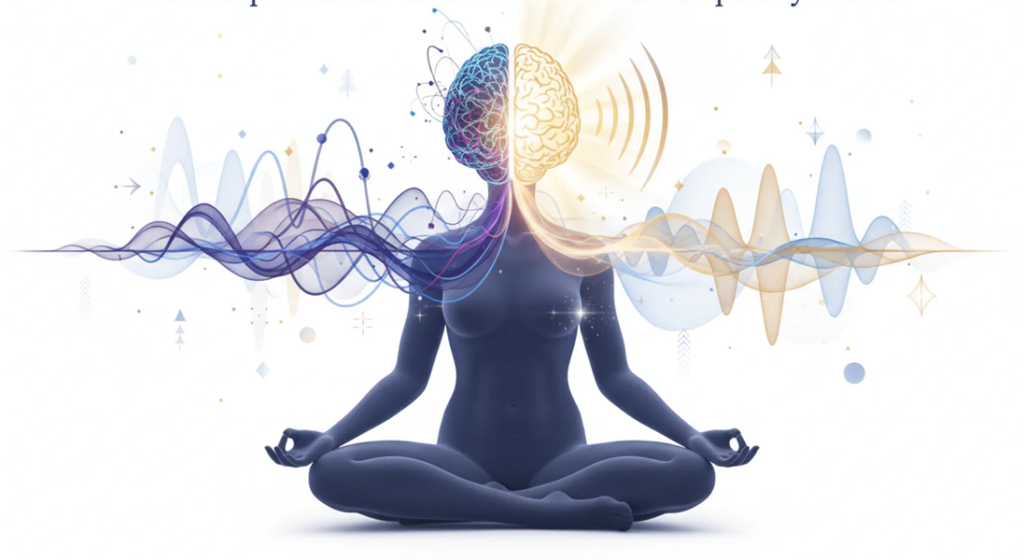
Your subconscious mind is working right now. It’s processing information, filtering what you see and hear, quietly steering your decisions. Most people never really tap into this. But what if you could program your subconscious to work toward your goals while you sleep?
This isn’t some New Age nonsense. There’s actual neuroscience behind it, and I’ve seen it work, not just for me, but for dozens of people I’ve coached over the years.
Understanding the Subconscious: Your Brain’s Autopilot System
Your subconscious mind is like an autopilot system running in the background of your awareness. While your conscious mind can only handle a few pieces of information at once, your subconscious processes millions of bits of data every second. It controls your heartbeat, your breathing, your habitual behaviors, and crucially, it determines what you notice in your environment.
Here’s where it gets interesting: your subconscious doesn’t distinguish between what’s real and what’s vividly imagined. When you mentally rehearse an experience with enough detail and emotional engagement, your brain activates many of the same neural pathways as if you were actually living that experience. Athletes have known this for decades—visualization isn’t just daydreaming; it’s neural training.
But there’s a catch. Your subconscious mind doesn’t create on its own. It needs direction from your conscious mind. It’s incredibly powerful, but it requires clear, consistent programming. Feed it scattered thoughts, doubts, and conflicting messages, and it will produce scattered results. Give it a clear target with emotional conviction, and it becomes an unstoppable force working on your behalf 24/7.
The Snapshot Technique: Why Static Images Beat Mental Movies
Most people visualize their goals incorrectly. They create elaborate mental movies of their future success, imagining every detail of the journey. While this seems logical, it’s actually less effective than a simpler approach: the snapshot.
Think of your goal as a single photograph, a frozen moment capturing you already having achieved what you want. Not the journey, not the struggle, not the process. Just the end result, crystallized in one vivid image.
Why does this work better? Your subconscious mind responds more powerfully to concrete, specific images than to vague sequences. A snapshot is definite. It’s real. When you imagine yourself in that achieved state, not “trying to get there” but already there, you send a clear signal to your subconscious about where you’re headed.
The key is realism. Don’t make it fantasy. Make it a genuine scene you could capture with a camera if that moment existed right now. What are you wearing? Where are you standing? What expression is on your face? Who’s around you? The more sensory detail you include, the more your brain treats it as a real memory of something that hasn’t happened yet but will.
This isn’t about positive thinking alone. It’s about creating a neural template that your brain can recognize and work toward. Your reticular activating system-the part of your brain that filters information-begins looking for opportunities, resources, and actions that match this template. Suddenly, you start noticing things you would have missed before.
The 5 AM Window
Not all hours are created equal when it comes to programming your subconscious. There are windows of opportunity when your brain is uniquely receptive to suggestion and visualization.
The most powerful window opens around 5 AM, that liminal space between sleep and full wakefulness. During this time, your brain naturally produces alpha waves, oscillating at 8-12 Hz. This is the frequency associated with relaxed alertness, creativity, and heightened suggestibility. You’re conscious enough to direct your thoughts but relaxed enough that your critical, skeptical conscious mind isn’t fully engaged.
In this alpha state, the barrier between your conscious and subconscious minds becomes permeable. Messages pass through more easily. This is why morning visualization can be so transformative. Your snapshot exercise at 5 AM reaches deeper into your neural programming than the same exercise at noon.
But there’s another crucial window: right before sleep. The period just before you drift off is when your brain transitions into theta waves (4-8 Hz), an even deeper state of receptivity. Whatever thoughts and images occupy your mind in these final conscious moments have special access to your subconscious processing throughout the night.
What You Do Before Bed Matters
Here’s where the practice becomes practical. Before you sleep, you have the opportunity to give your subconscious mind its assignments for the night. While your body rests, your brain continues working, consolidating memories, processing emotions, and problem-solving.
Research in sleep science confirms this. During REM sleep and certain stages of deep sleep, your brain reorganizes information, strengthens neural connections related to your goals and concerns, and even generates creative solutions to problems. But what your brain chooses to work on depends largely on what you feed it before sleep.
This is why the pre-sleep routine matters so profoundly. If you spend the last hour before bed scrolling social media, watching random videos, or engaging in meaningless distraction, you’re giving your subconscious noise to process. Your brain will spend the night sorting through trivial information, scattered thoughts, and other people’s agendas.
But if you deliberately focus on your goals, review your snapshot, and consciously direct your mind toward what matters most, your brain will work on that instead. You’ll wake up with fresh insights, renewed motivation, and often surprising clarity about next steps.
The Night Journal: Writing Your Way to Success
Thinking about your goals is good. Writing about them is transformative.
When you write, you engage different parts of your brain than when you simply think. The act of forming letters, whether by hand or typing, requires motor cortex activation. Translating thoughts into written language demands clarity and precision. Seeing your words on paper (or screen) creates a feedback loop, allowing you to process your intentions more deeply.
This is why a night journal is one of the most powerful tools for subconscious programming. Before bed, write out your goals, your snapshot visualization, and crucially, your daily achievements.
The achievement tracking element creates what’s known as the compound effect. Every day, you write down what you accomplished—no matter how small. Sent that important email? Write it down. Had a difficult conversation? Record it. Made progress on your project? Document it.
Why does this matter? Because your subconscious learns from patterns. When you consistently record achievements, you’re training your brain to recognize yourself as someone who accomplishes things. You’re building self-efficacy—the belief in your capacity to execute actions required to achieve goals. This isn’t empty self-esteem boosting; it’s evidence-based self-perception.
The combination is powerful: you write your achievements (proving to yourself that you take action), then you write your goals (directing where that action should go next), and then you sleep. Your subconscious spends the night connecting the dots, building bridges between who you’ve proven you are and who you’re becoming.
The Pre-Sleep Phone Discipline
Going to bed without your phone isn’t easy in our hyper-connected world. But it’s essential. Here’s why it’s worth the discomfort:
When you check your phone before bed, you’re not just looking at information. You’re triggering dopamine responses, activating stress responses (to negative news or social comparisons), and fragmenting your attention across dozens of micro-topics. Your brain doesn’t shut down the moment you close your eyes. It continues processing whatever occupied your mind in those final conscious moments.
If the last thing you did was scroll social media, your brain will spend precious sleep cycles processing trivial information-random posts, advertisements, other people’s curated lives. This isn’t what you want your subconscious working on.
Instead, make your pre-sleep hour sacred. Read your goals. Visualize your snapshot. Write in your journal. Reflect on your achievements. Maybe read something aligned with your purpose. Then sleep.
Your subconscious will take these inputs and work with them throughout the night. You’ll experience what researchers call “sleep-dependent memory consolidation” and “unconscious problem-solving.” People often wake up with sudden clarity or solutions that seem to appear from nowhere, but they’re not from nowhere. They’re from a night of focused subconscious processing.
The Morning Phone Discipline
The morning is equally critical. When you wake up, your brain is still in a transitional state, still connected to the deeper processing that happened during sleep. If you immediately grab your phone, you interrupt this process and flood your consciousness with external demands.
Think about what happens when you check your phone first thing: emails from your boss, news that triggers anxiety, social media that sparks comparison or envy, messages that create obligations. Each notification hijacks your attention and redirects your mental energy away from your goals and toward someone else’s agenda.
The first hour after waking should be protected. This is when your alpha wave activity makes you most receptive to positive programming. Use it wisely. Review your goals. Do your snapshot visualization. Perhaps meditate, exercise, or journal. Take actions aligned with your purpose before you take actions demanded by others.
This creates momentum. You’ve now bookended your sleep with focused subconscious programming—strong input before bed, strong reinforcement upon waking. Your brain spends most of its time in this goal-oriented state rather than in scattered reaction mode.
The Greatest Obstacle: Your Smartphone
Now we come to the hard truth, the obstacle that sabotages this entire process for most people: smartphone addiction.
You can do everything right-perfect visualization, powerful journaling, clear goals and still fail if you don’t address your phone habits. Here’s why.
Imagine you’re in an air-conditioned room having a deep, meaningful conversation. The AC is running, generating a constant background hum. Can you hear it? Probably not. Your brain has filtered it out because you’re focused on the conversation. The sound exists, but your selective attention ignores it.
This illustrates an important principle: your brain focuses on what you tell it is important and filters out everything else.
When you program your subconscious with your goals before sleep, your brain spends the entire night processing that information. It’s working on your behalf, building neural pathways, generating insights, priming you to notice opportunities. You wake up in the morning with your subconscious mind still focused on what matters.
Then you reach for your phone.
Within seconds, you’ve flooded your attention with dozens of different stimuli. Social media feeds, news headlines, messages, notifications-each one pulling your focus in a different direction. The careful programming you did the night before gets drowned out by noise.
It’s not that your goals disappear. They’re still there, like the AC hum. But now your brain is filtering them into the background while it processes the avalanche of irrelevant information from your phone.
This is why the phone-free window is non-negotiable. You must eliminate phone use for at least one hour before sleep and the first hour after waking. These are your sacred hours for subconscious programming.

The Consistency Principle: Why Purpose Matters
Your subconscious responds to repetition and consistency. One night of visualization won’t change your life. One week won’t either. But three months of consistent practice? Six months? That rewires your brain.
Neuroplasticity-your brain’s ability to form new neural pathways-requires repetition. Every time you perform your snapshot visualization, you strengthen the neural networks associated with that goal. Every time you write in your night journal, you reinforce the identity of someone who acts with intention.
But here’s the crucial element many people miss: purpose. Your subconscious programming works exponentially better when your goals serve a purpose beyond yourself. This isn’t about morality; it’s about motivation. Goals rooted in genuine purpose-helping others, creating something meaningful, solving real problems-generate stronger emotional engagement. And emotion is the language your subconscious understands best.
When your goals align with your deeper values and serve a purpose you genuinely care about, your subconscious doesn’t just work on them occasionally. It becomes obsessed with them. It filters your entire reality through the lens of these purposes, constantly searching for ways to move you forward.
Putting It All Together: The Daily Practice
Here’s what the complete practice looks like:
Morning Routine (first hour after waking):
- Wake up naturally if possible (around 5 AM catches the alpha wave window)
- Don’t reach for your phone
- Immediately reconnect with your snapshot visualization
- Feel gratitude for the progress you’re making
- Review your written goals
- Take at least one action aligned with your purpose before checking any device
Evening Routine (one hour before sleep):
- Put your phone away (completely out of reach, not just face-down beside you)
- Open your night journal
- Write down your achievements from the day—everything you accomplished, no matter how small
- Write out your main goal in present tense, as if already achieved
- Perform your snapshot visualization—see yourself in that achieved state with vivid detail
- Feel the emotions of having already accomplished this goal
- Go to sleep with this image and feeling in your mind
Starting tonight, implement the pre-sleep protocol. Put your phone away one hour before bed. Write in your journal. Visualize your snapshot. Do this for 30 days straight and observe what changes.
You’ll likely notice subtle shifts first-increased motivation, better ideas, more relevant opportunities appearing. Over time, these small shifts compound into significant results. Goals that seemed distant start feeling inevitable.
Your subconscious mind is the most powerful tool you possess. It’s working constantly, processing endlessly, steering silently. The only question is: what are you programming it to create?
Give it clear direction. Protect it from distraction. Feed it consistent, purposeful input. Then watch as it transforms your goals from wishes into reality-not through magic, but through the remarkable power of a focused mind working toward a clearly defined target.
The gold you seek doesn’t come from luck or chance. It comes from within, from the untapped potential of your subconscious mind, waiting for you to finally give it the clear instructions it needs to make your vision real.